
China: Powered by Dumplings
Yiwu: Seafood Hot Pot and a Chopstick Reality Check
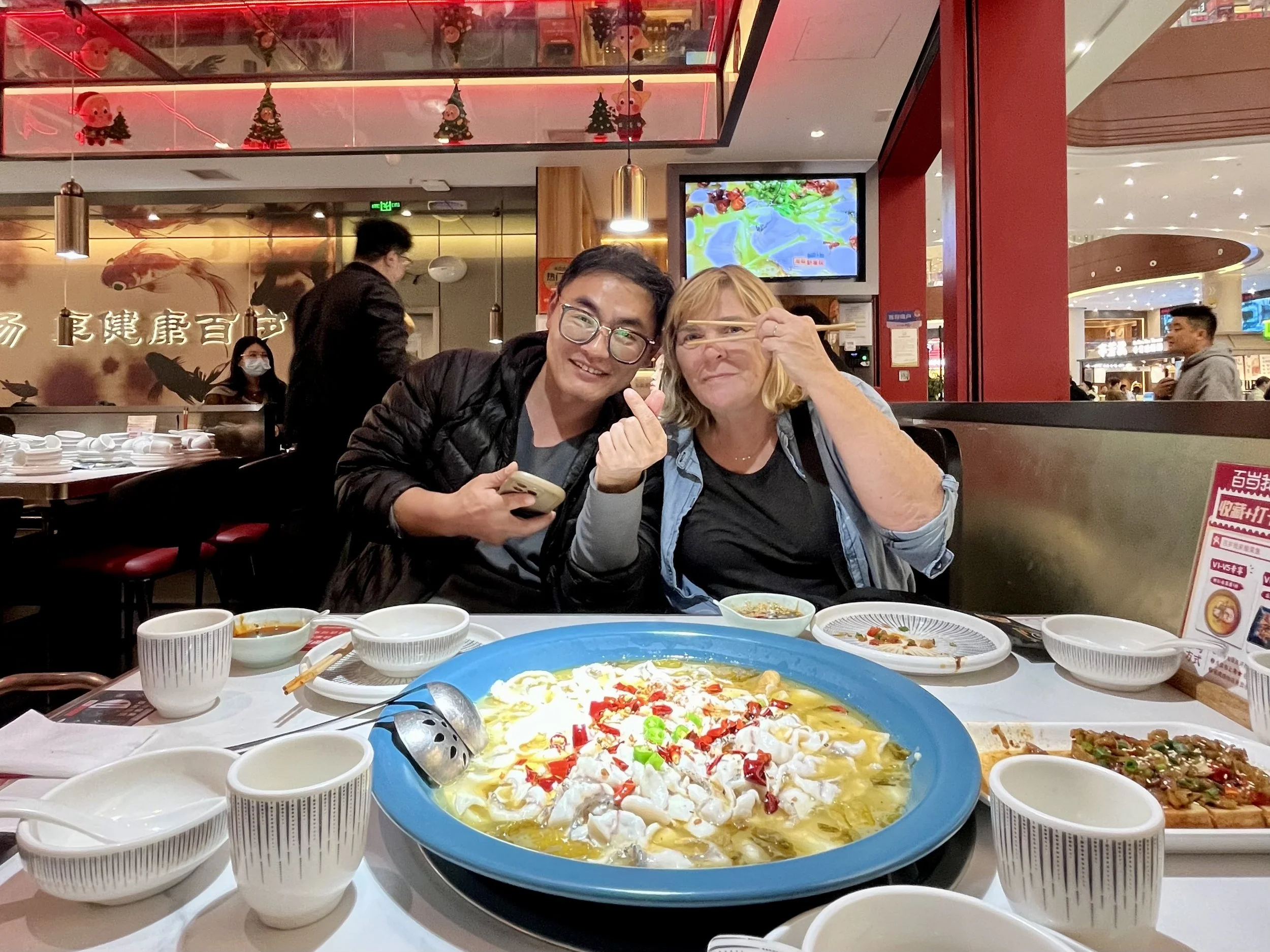
Mom and Jim enjoying hotpot!
Our first stop was Yiwu, where we were welcomed with an incredible seafood hot pot. If you've never had hot pot before, imagine a bubbling pot of flavorful broth placed in the middle of the table, where everyone cooks their own ingredients. It's part meal, part social event, and part delicious challenge as you try to figure out the perfect combination of ingredients and sauces.
Fun fact: Hot pot dates back more than 1,000 years and is believed to have originated along China's rivers, where fishermen would cook their catch in communal pots.
There are so many things I love about Chinese food, but one of my all-time favourites is the incredible variety of tofu. Tofu appears in countless forms, textures, and preparations.
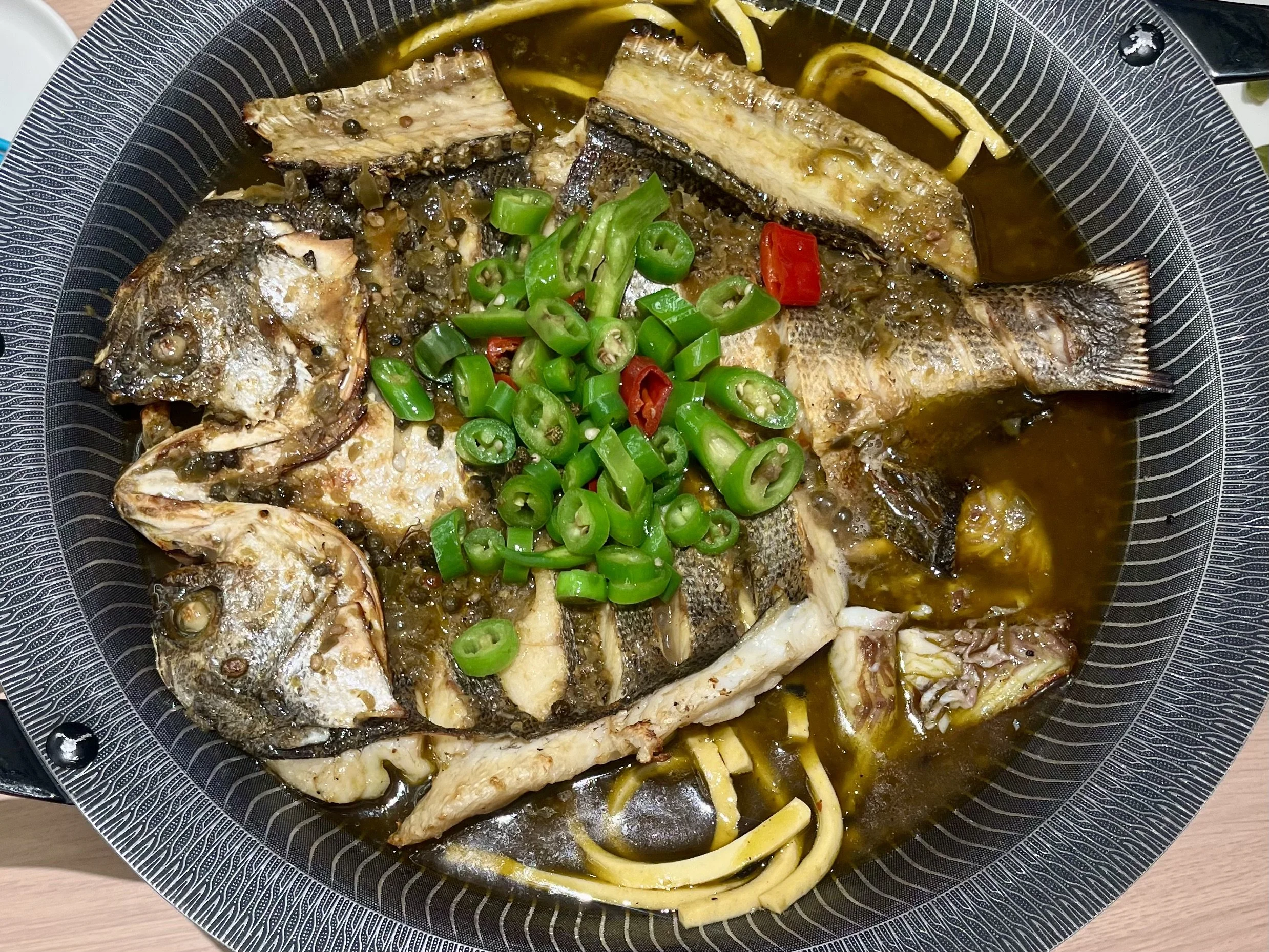
Braised fish with tofu skin noodles
Sometimes called thousand-sheet tofu. The tofu skin absorbs the savoury broth while adding a chewy texture to the dish.
Yiwu was also where I had an embarrassing realization that I have been holding chopsticks incorrectly my entire life! I taught myself as a kid and never stopped to consider there might actually be a proper technique. Thankfully, my friend Jim patiently showed me and by the end of the trip I was handling noodles, dumplings, and slippery seafood with much greater success. Here’s a link to a video on holding chopsticksin case you’d like to also improve your technique!
Beijing: Peking Duck and YuMMY SNACKS
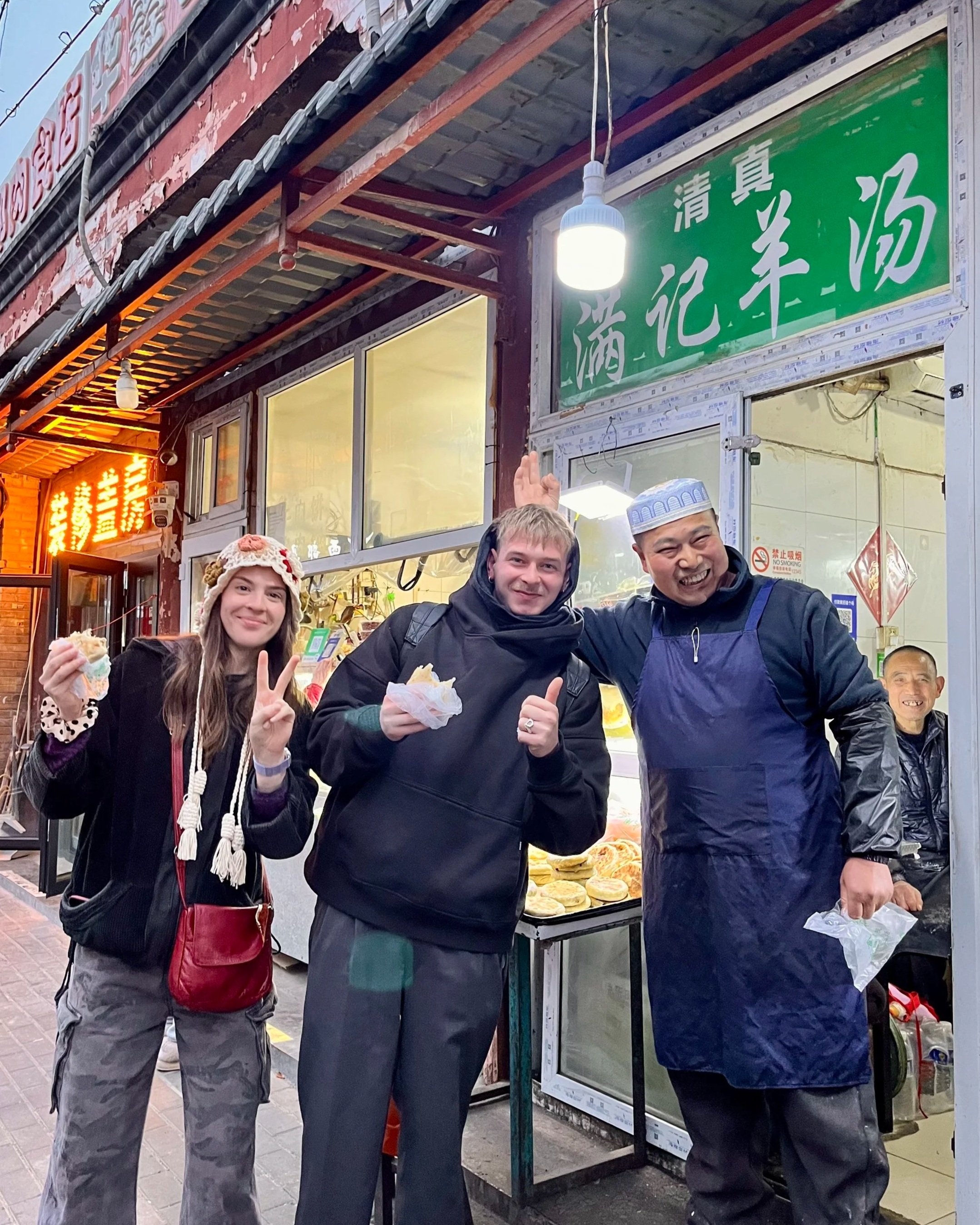
Xianbing (馅饼) A traditional Beijing stuffed meat pie. They're often filled with pork or beef and green onion, and are a beloved local comfort food.
Next we headed to Beijing, home of the famous Peking duck. Peking duck has been served in Beijing since the imperial era and is known for its crispy skin, which is often carved tableside and wrapped in thin pancakes with scallions and sauce. While it's one of China's most celebrated dishes, I have to admit that duck isn't really my thing, so I skipped it. Gian, however, absolutely loved it.
Fun fact: During the Ming Dynasty, builders mixed sticky rice soup into mortar used for walls, bridges, and other structures. The rice starch created an incredibly strong binding material that helped some sections of the Great Wall survive for centuries.
Xi'an: Dumplings, Lamb Soup, and the Muslim Quarter
One of the highlights of the trip was a food tour through Xi'an's famous Muslim Quarter, booked through GuruWalk. Xi'an sits at the eastern end of the ancient Silk Road, and its food reflects centuries of cultural exchange. The influence of Muslim communities can be found throughout the city's cuisine.
We started with handmade dumplings, we were warned that often times the ones you get in restaurants have been frozen. Our guide Yunyun took us to a spot where we could watch the chefs make them fresh. Another local specialty was yangrou paomo, a traditional lamb soup served with pieces of flatbread that are broken into the bowl before eating.
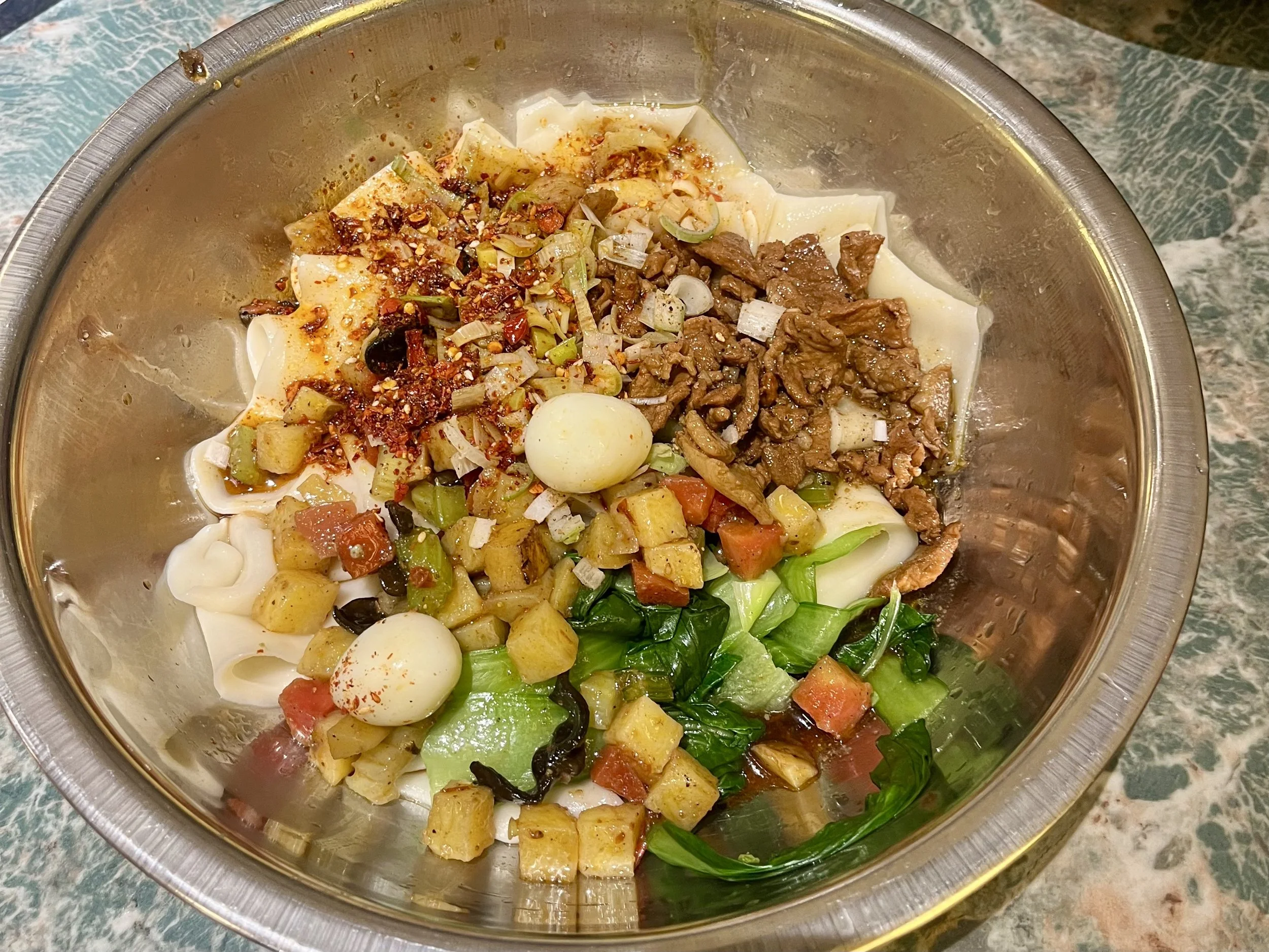
Biang biang noodles (biángbiáng miàn)
Named after the sound the dough makes as it is stretched and slapped against the counter by hand.
The character for "biang" is famously one of the most complicated Chinese characters ever created, with so many strokes that it was traditionally easier to teach people a rhyme than to teach them how to write it.
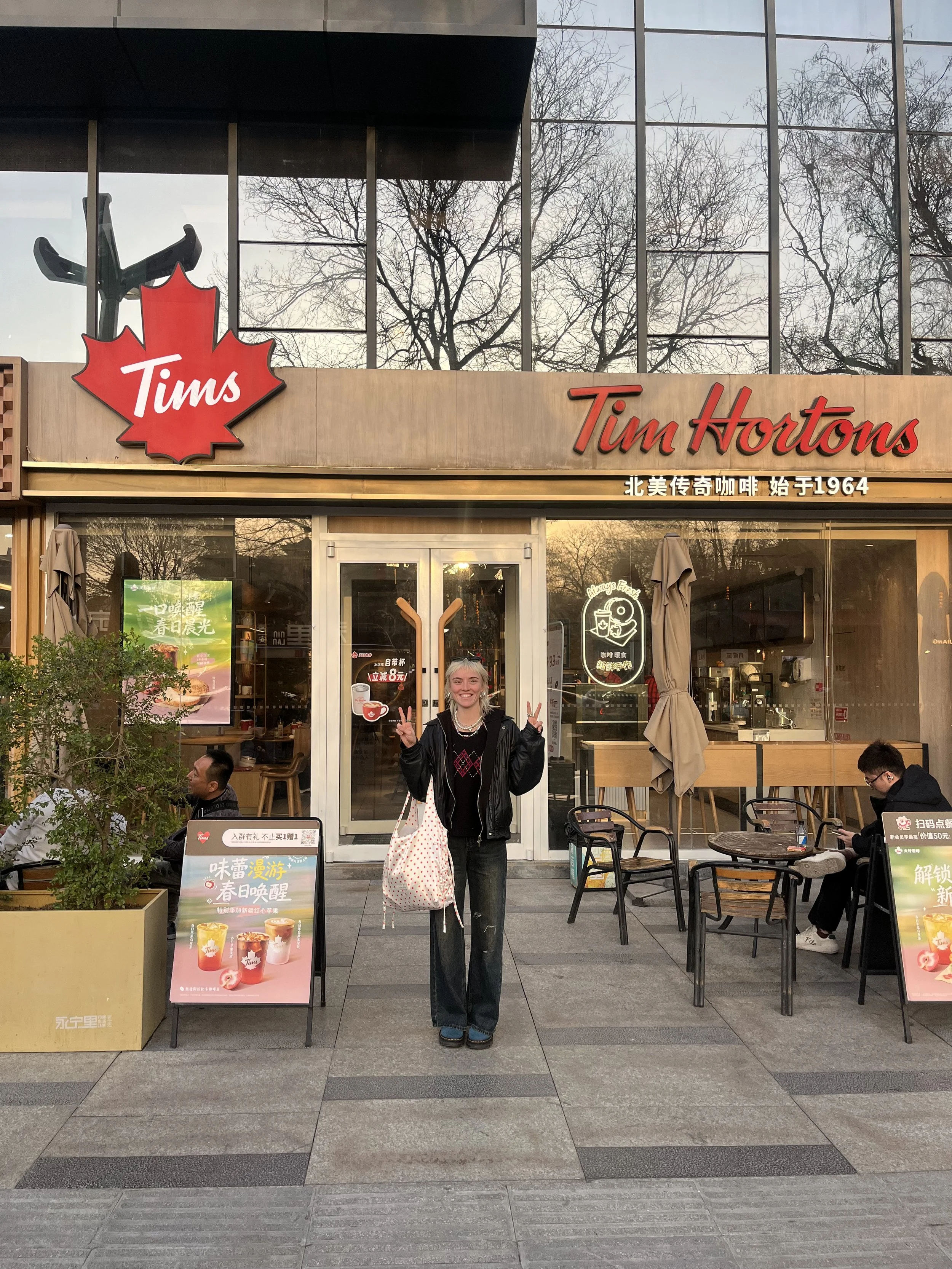
Home away from home!
One thing we discovered while wandering the city: Tim Hortons exists in China. No, they do not serve donuts!
Throughout Xi'an everyone was eating raw garlic alongside grilled meats and noodle dishes. Entire cloves would be served at the table, we were told to bite into them between mouthfuls of food. Garlic has long been a staple in the region's cuisine. Many people believe it helps balance rich, meaty dishes, and it's especially common alongside Xi'an's famous lamb skewers and other Muslim Quarter specialties.
Chengdu: Markets, Tea Houses, and Very Spicy Food
Chengdu is the capital of Sichuan province, famous around the world for bold flavors, chili peppers, and the mouth-numbing sensation created by Sichuan peppercorns. And yes, this is also the city famous for giant pandas.
We tried hot pot again, this time with a split broth. One side was mushroom-based and the other tomato-based. Both were incredible, although we quickly learned that even dishes labeled "mild" can pack a surprising amount of heat in Chengdu.
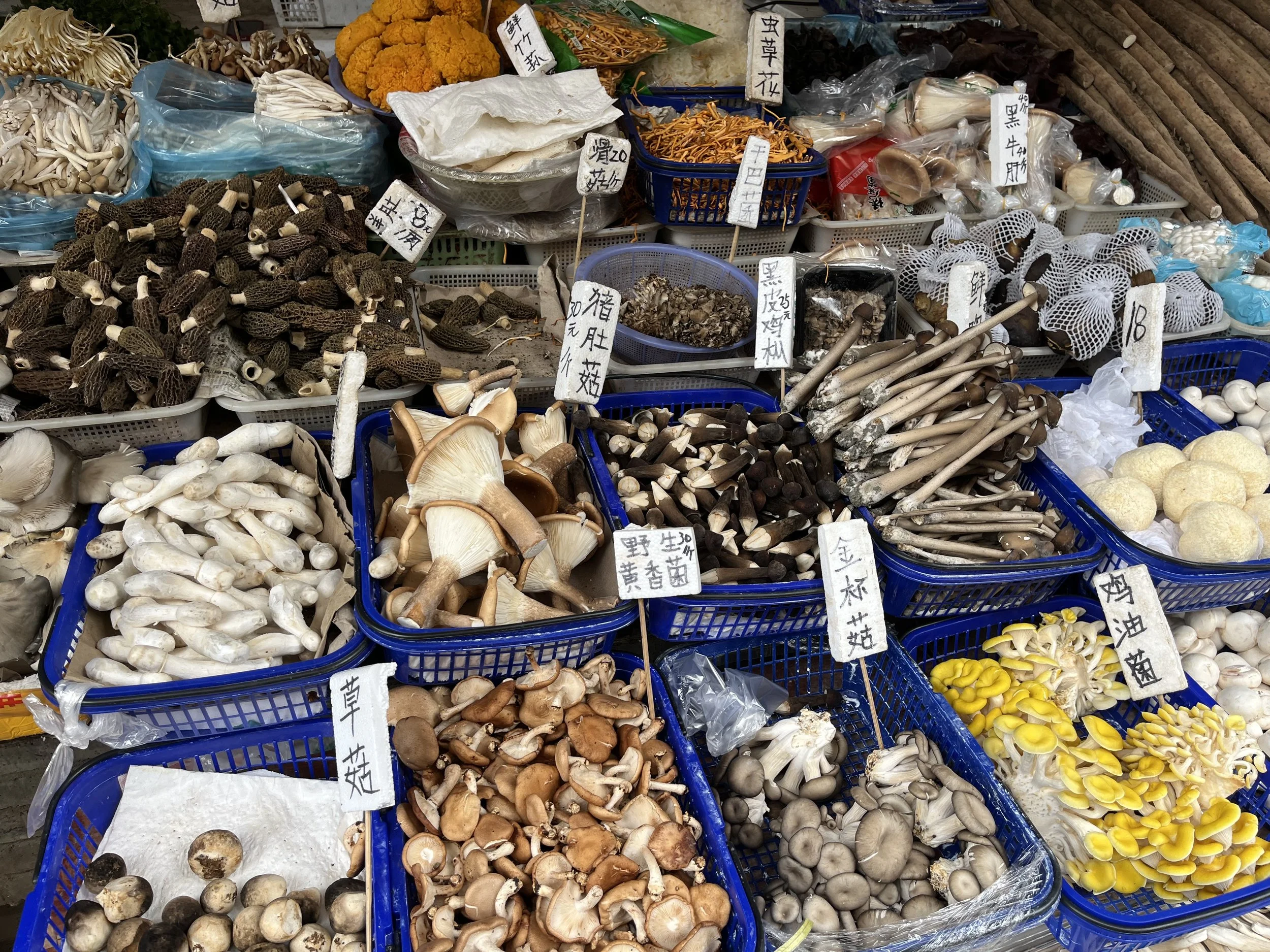
Mushrooms in the market.
We loved the first tour so much that we had to book another. The tour took us through a bustling local market where we saw enormous clay fermentation vessels used for pickling vegetables and making preserved foods. We watched workers drying tofu skins and browsed stalls filled with mushrooms, fresh ginger, and unbelievably long yams.
One food I wasn't quite prepared for was the century egg. Despite the name, it's not actually a hundred years old. Traditionally preserved for several weeks or months, the egg develops a dark jelly-like texture and a strong flavor. It's a beloved delicacy for many people. I had a bite, although not my favourite I love to see different ways people preserve food.
I was told they are given to lovers as romantic gifts, looking forward to receiving some next Valentines day.
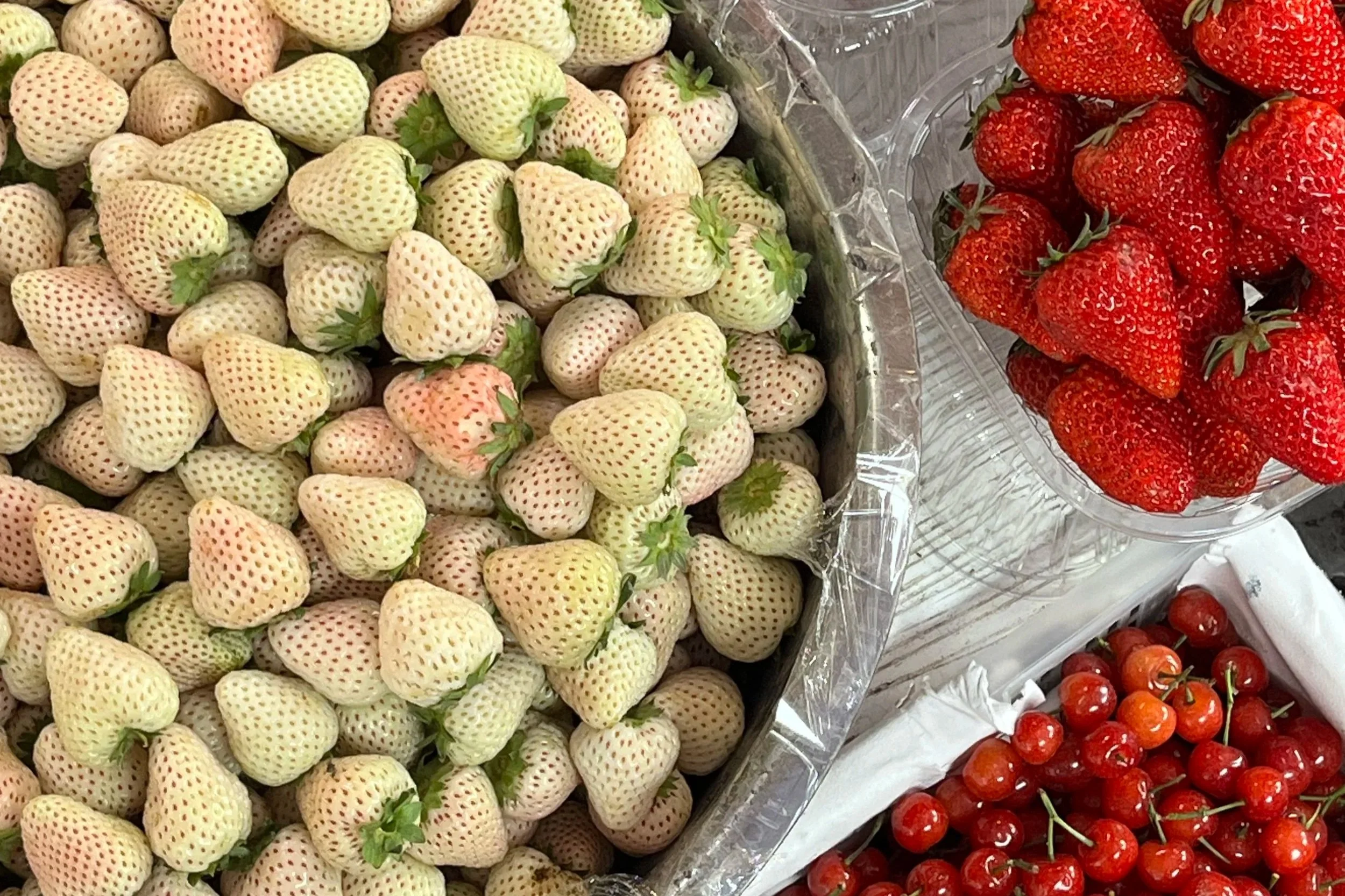
We also spotted white strawberries. Despite their unusual appearance, they're fully ripe. Some varieties are called "pineberry" because they have a subtle pineapple-like flavor. They're often considered a luxury fruit due to their limited production.
Later we visited a traditional tea house where we learned about Chinese tea culture. The tea we sampled was incredibly old and surprisingly expensive. Some rare pu-erh tea cakes are bought by collectors and can sell for thousands of dollars, with their value increasing as they age. The ceremony emphasizes patience, hospitality, and appreciation for subtle flavors.
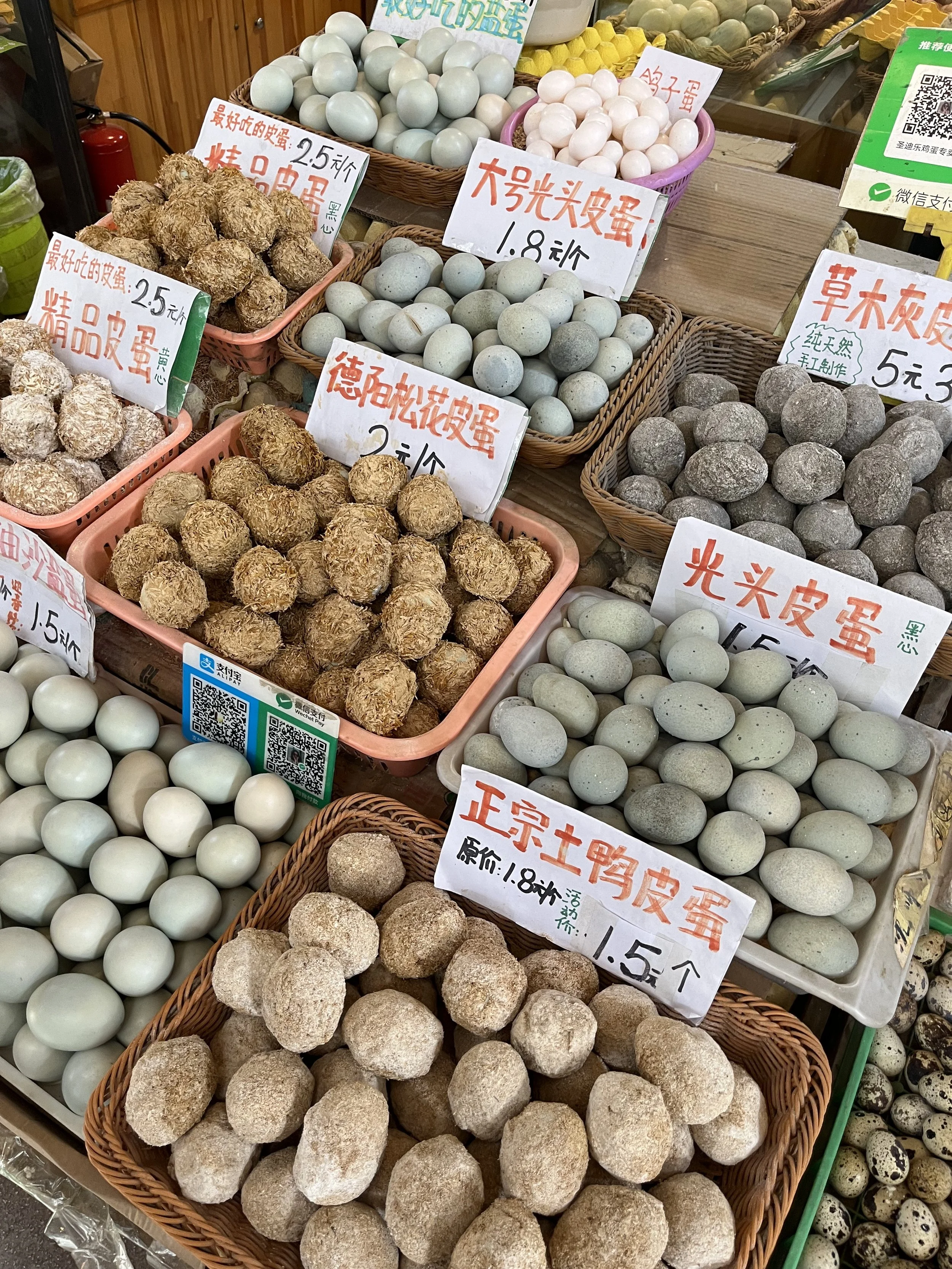
Preserved century old eggs!
Shanghai: Soup Dumplings and Shared Tables
Our final major food stop was Shanghai, where, unsurprisingly, we signed up for yet another food tour. Shanghai's cuisine tends to be slightly sweeter than many other regional Chinese cuisines, often using soy sauce, sugar, and rice wine to create rich, balanced flavors.
The standout dish was xiaolongbao, better known as soup dumplings. Each delicate dumpling contains hot broth inside, making the first bite both exciting and slightly dangerous.
We also visited a historic restaurant famous for its pan-fried dumplings. The restaurant traces its roots back to the early years of China's economic reforms in the late 1970s and 1980s, when private businesses and family-run restaurants were once again allowed to operate after decades of state-controlled dining. During that period, many entrepreneurs started small food stalls and eateries, helping revive local culinary traditions that might otherwise have been lost.
One of my favourite things about Shanghai that is seen all around Asia wasn't a specific dish but the dining culture itself. Many restaurants are packed, noisy, and communal. Strangers share tables, everyone focused on enjoying good food rather than worrying about personal space.
Other memorable bites included layered fermented tofu, liver dishes, and even fried quail for dessert.
Final Thoughts
In China every region has its own ingredients, techniques, flavors, and traditions. What struck me most was the complexity of nearly every dish. Whether it was a simple bowl of noodles or an elaborate seafood feast, there always seemed to be layers of flavor built from ingredients that had been fermented, pickled, dried, aged, or prepared using techniques passed down through generations.
By the end of the trip, I realized I hadn't just been eating my way across China. I had been experiencing dozens of distinct food cultures, each with its own history and personality.